Wildlife-vehicle collision risk rises across Yukon through April
Published 5:00 am Monday, March 2, 2026
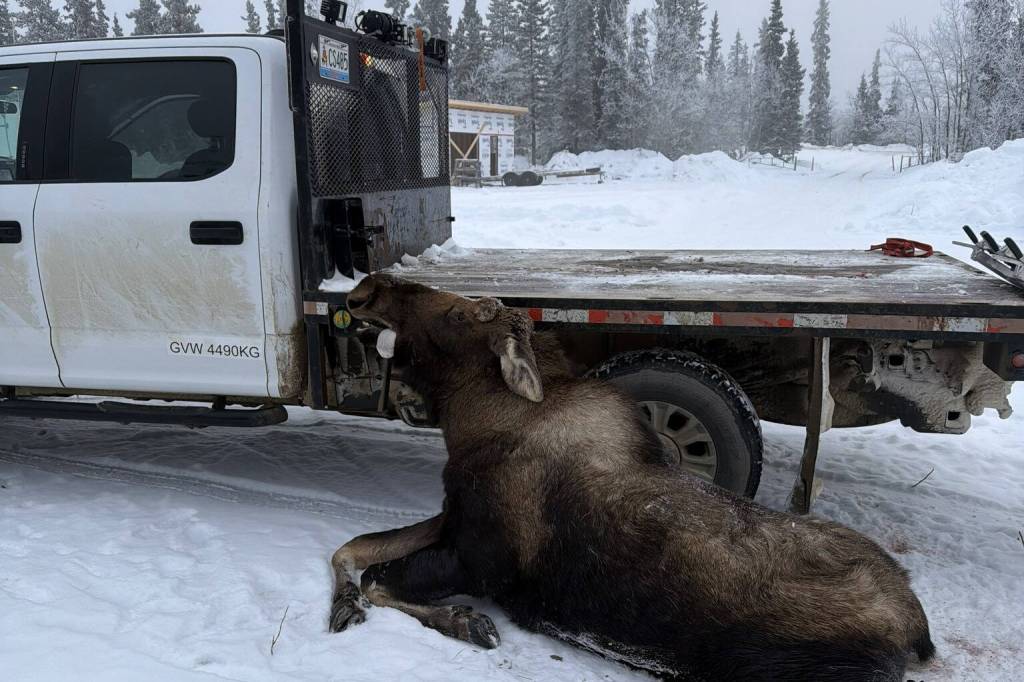
Thirty‑four wildlife‑vehicle collisions have been recorded so far in 2026, though Yukon Environment spokesperson Erin Kohler told the News some incidents go unreported and some animals may die away from roads.
Moose are struck most often, followed by deer and caribou, she said.
Kohler said animals are commonly seen on roadways in winter, drawn by foraging opportunities, roadside salt, and easier travel when snow deepens in the backcountry.
This year, Kohler said several moose have been hit in the Southern Lakes region on the Alaska Highway and the South Klondike Highway. Deer collisions are more common in agricultural areas, particularly along the Alaska Highway north of Whitehorse.
Northern Mountain Caribou ranges overlap with several highways from late October to April, including areas near Jakes Corner, Squanga Lake, Tagish and the stretch from the British Columbia border to Big Creek and Mount Lorne. The Little Rancheria, Horse Ranch, Laberge, Carcross and Atlin herds are especially vulnerable during these winter movements, Kohler said.
Elk are also often seen along roadways in the Ibex Valley and Braeburn areas, while sheep are frequently spotted near Thechàl Dhâl, also known as Sheep Mountain in the Kluane region.
Kohler said no changes to migration patterns or food availability have been noted this winter, though heavy snowfall and freeze‑thaw cycles have shaped conditions and may influence how animals move near roads. She said caribou typically move from high‑elevation summer and fall ranges to low‑elevation pine and spruce forests when mountain snow becomes too deep.
Low‑elevation areas with open pine and spruce forests offer abundant ground lichen and shallower snow, making travel and feeding easier, Kohler said. She added that wildlife are also drawn to roadways for reasons such as foraging, salt, and easier movement in winter.
Collision risk increases Yukon‑wide from now until April due to shorter daylight hours and increased wildlife activity, Kohler said. The most dangerous times are between dusk and dawn, when visibility drops, and animals are more active near road corridors.
Drivers are advised to watch the ditches for movement or eye reflections and to proceed cautiously through known hotspots at any time of day. Kohler said icy conditions after recent weather changes pose added challenges for hooved animals, which may struggle to cross snowbanks or keep their footing on slick pavement.
Kohler added that truck drivers who see wildlife near the highway are asked to radio others in the area so they can slow down. Drivers commonly flash their high beams to warn oncoming traffic of animals on or near the road.
A map of wildlife-vehicle collision hotspots is available on 511Yukon.
The Yukon Environment Department works with Renewable Resources Councils, First Nations, and local governments to gather collision information and educate the public on where crashes are most likely to occur.
Anyone involved in a collision with wildlife, or who sees an injured animal, should call conservation officers through the 24‑hour line at 1‑800‑661‑0525. Kohler said injured wildlife can be unpredictable and dangerous, and drivers should not exit their vehicles unless they are certain the animal is dead.
Contact Jake Howarth at jake.howarth@yukon-news.com