Yukon’s next frontier: Exploration Momentum from mining industry convention
Published 2:30 pm Wednesday, March 4, 2026
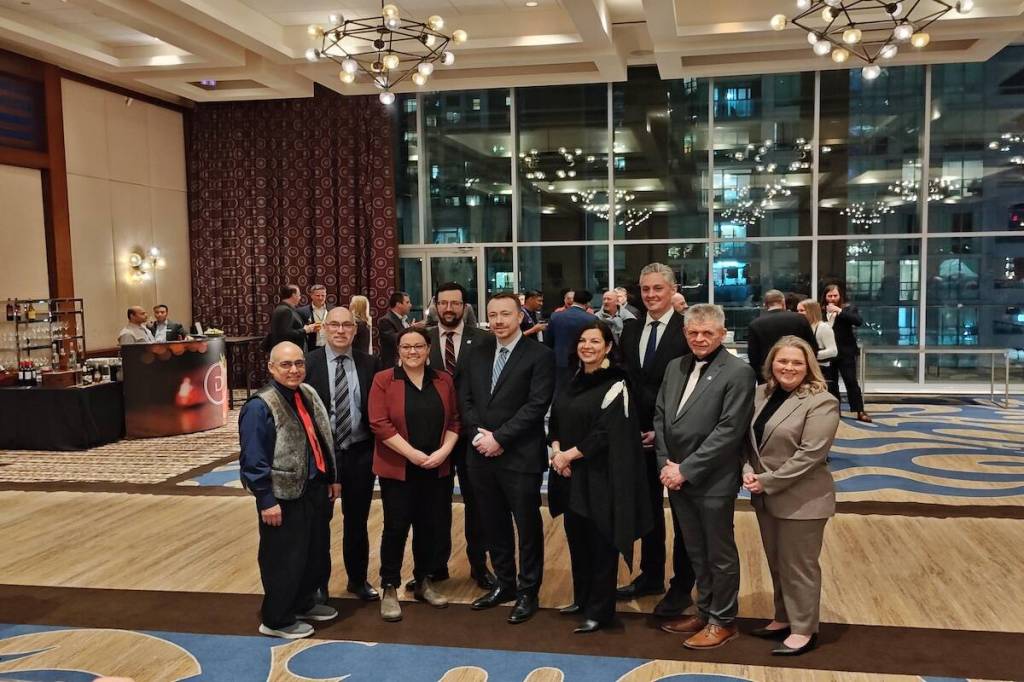
The annual convention of the Prospectors & Developers Association of Canada (PDAC) is where the global mining industry takes its pulse. At PDAC 2026 in Toronto, more than 27,000 delegates from over 125 countries gathered at the Metro Toronto Convention Centre for four days of technical sessions, deal-making and networking.
In one hour on the convention floor, I spoke with Yukon Energy, Mines and Resources Minister Ted Laking, met Tara Christie, president and CEO of Banyan Gold, and caught up with Shawn Ryan, co-founder and director of White Gold Corp. The message was clear: global competition for exploration dollars is intense, and Yukon intends to compete. A $313-million year — and room to grow.
Mineral resource development remains a cornerstone of Yukon’s economy. In 2025, $313 million was spent in the territory, including $241.7 million on exploration and deposit appraisal. Those are significant numbers for a jurisdiction of Yukon’s size — but they come with expectations around regulatory performance, environmental stewardship and long-term community benefits.
Laking said his department is focused on improving service delivery by developing and publishing clear service standards and permitting timelines. Companies need predictability around regulatory decisions, he said. Making timelines public would allow proponents — and Yukoners — to see whether government is meeting its own benchmarks.
“It’s about being held accountable for the essential function of regulatory decisions on mineral and exploration projects,” he said, arguing transparency is key to rebuilding investor confidence.
That effort comes against the backdrop of the 2025 Annual Survey of Mining Companies by the Fraser Institute. Yukon’s Investment Attractiveness Index score of 71.4 trailed Saskatchewan at 89.6 and B.C. at 75.9. Laking acknowledged the need to rebuild confidence and trust, adding that future Fraser Institute reports will serve as one measure of progress. He has targeted spring 2028 to introduce new mining legislation.
Trust also depends on how projects unfold on the ground. The heap leach failure at Victoria Gold’s Eagle mine led to 50 recommendations in the receiver’s Independent Review Board report released in July 2025. Laking said implementing those recommendations is a first step toward ensuring mining in Yukon is done responsibly.
He emphasized that Yukoners must engage early. When a project is proposed in a community, he said, residents should participate in consultation processes and make their voices heard. From soil samples to drill rigs if the government sets the policy table, exploration companies bring the risk capital.
Ryan — recognized by PDAC in 2011 as Prospector of the Year for his role in discovering the Coffee project — described Yukon’s exploration arc over the past 15 years. Early work relied heavily on extensive soil sampling programs that identified geological targets across vast greenfield areas. Today, companies are focused on converting those targets into measured, indicated and inferred resources through intensive diamond drilling.
White Gold, backed by strategic partner Agnico Eagle Mines Limited, which owns roughly 19 per cent of the company, plans to drill 25,000 metres this year. The goal is to complete a preliminary economic assessment in the second quarter of 2026.
Ryan is optimistic in part because of developments next door at the Coffee Gold Project, acquired by Fuerte Metals. The project hosts approximately three million ounces of measured and indicated gold resources within 80 million tonnes at an average grade of 1.15 grams per tonne (0.18 g/t cut-off). If coffee advances to production, Ryan said, road access and shared infrastructure could significantly enhance the economics of surrounding deposits, including White Gold’s.
Infrastructure, in mining, can be as valuable as grade Banyan’s breakout year
Few Yukon explorers have attracted as much attention in the past year as Banyan Gold. Christie described the company’s 506 per cent one-year share price increase as “an overnight success that took 10 years of hard work.”
In October 2025, Alpayana S.A.C., a private mining group with operations in Peru and Mexico, made a strategic $31.4-million investment in Banyan through common and flow-through shares. Christie first met Alpayana representatives at a trade show in 2021. Years of follow-up conversations and a site visit to the AurMac project in August 2025 culminated in the October deal — a reminder that in exploration, relationships are long-term assets.
Further validation came on March 1, 2026, when Franco-Nevada Corporation purchased a pre-existing royalty on Banyan’s properties from the receiver of Victoria Gold for $52.2 million. Banyan had issued a six per cent net smelter return royalty on the McQuesten and Aurex properties, with an option to reduce it to one per cent for a $10-million payment. The transaction effectively values a one per cent NSR at $42.2 million — a strong vote of confidence in the project’s potential.
That confidence is grounded in results. At the AurMac project near Mayo, Banyan reported high-grade silver intercepts from the Powerline deposit’s Ag-1 vein in January 2026, including 5,625 g/t silver over 3.4 metres within a broader interval of 1,841 g/t over 10.4 metres, and a higher-grade segment of 10,734 g/t over 1.7 metres. Such high-grade Keno-style silver mineralization may prompt a revised geological interpretation of what has primarily been advanced as a gold development project.
Banyan is now funded for a 40,000-plus-metre diamond drill program in 2026 — an aggressive campaign by Yukon standards. Yukon expertise, Yukon jobs.
Behind those metres drilled is Kluane Drilling Ltd., a Yukon-based private company with 35 years of experience. About half of Banyan’s drilling staff are Yukon residents, and roughly 30 per cent live in or near Mayo. Kluane’s lightweight, mobile rigs — designed for challenging northern terrain — have also been exported to projects in Mexico, Central and South America, and Ethiopia.
For Laking, however, the longer-term question is whether more Yukoners can access careers in the sector. While northern mines often rely on fly-in, fly-out workers with specialized skills, he argues it is incumbent on the government to expand local training opportunities so residents can participate more fully in the resource economy.
Christie echoed that broader view of community investment. Even amid major financings and drill programs, she highlighted support for “Every Student, Every Day,” a privately funded initiative encouraging consistent school attendance. In some Yukon schools, students miss between 20 and 53 days per year — absences that can limit future opportunities in any field, including mining.
Laying the groundwork
PDAC 2026 underscored both the opportunity and the responsibility facing Yukon. Exploration spending remains strong. Companies are moving from early-stage targets to advanced drilling and economic studies. Strategic investors and royalty companies are committing capital.
For Whitehorse residents, the stakes are practical as well as financial: jobs, contracts, infrastructure and environmental safeguards. Whether the current exploration momentum translates into new operating mines will depend on regulatory performance, environmental oversight and sustained community engagement.
The global race for capital is real. At PDAC this year, Yukon signalled its intention to stay in — but long-term success will be measured not only in metres drilled or dollars raised, but in trust earned at home.
~ A special to the Yukon News from Brian O’Hara