Ottawa announces new grocery benefit amid rising food costs in Yukon
Published 2:30 pm Friday, March 6, 2026
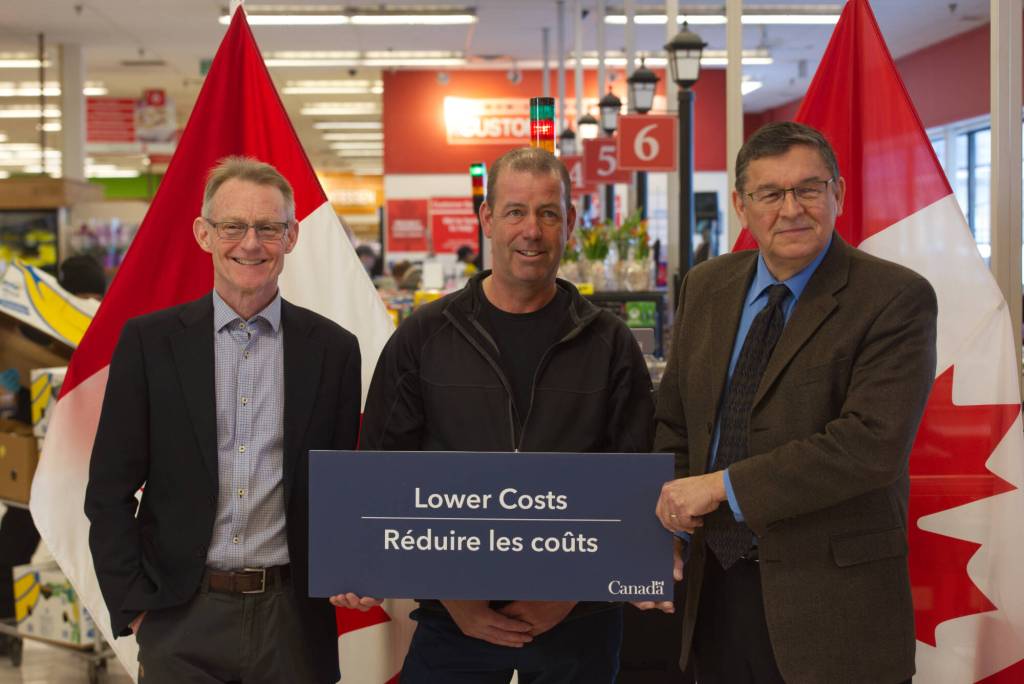
The federal government says it is reshaping the GST credit into a new Canada Groceries and Essentials Benefit, promising more cash for low and modest income households as food costs climb.
The announcement was delivered in Whitehorse at Wykes’ Independent Grocer on March 5 by Yukon MP Brendan Hanley and Secretary of State for Rural Development Buckley Belanger, who framed the change against the long‑standing reality of high transportation and supply costs in the North.
The program replaces the GST credit outright, press secretary Connor Burton told reporters, with future payments appearing under the new benefit’s name. He described the Canada Grocery Essentials Benefit as a percentage top‑up applied to the GST‑equivalent base amount, saying it will provide a 50 per cent increase in the first year and a 25 per cent increase annually for the following four years.
Belanger said a single Yukoner receiving the GST credit could see their annual amount rise from roughly $543 to about $950 once the one‑time top‑up and new benefit are combined. A family of four could see support grow from about $1,086 to around $1,890, with roughly 10,000 Yukon residents expected to qualify.
“We know grocery bills are still too high and in the North that pressure is real,” Belanger said.
Reporters asked Burton how the benefit will track inflation and whether the increases compound year‑over‑year. He replied that the underlying GST‑equivalent amount, which the new benefit is based on, is indexed to inflation, and that the 25 per cent top‑up is applied to that inflation‑adjusted figure. He added that it is scaled to the national inflation rate but said he would need to confirm the exact measure.
Other questions focused on whether federal measures would narrow the gap between Northern and southern food prices, particularly transportation‑related costs. Belanger explained that Ottawa’s Strategic Response Fund is aimed at tariff‑hit sectors such as Saskatchewan’s canola industry, not general transportation fuel, a point Hanley spoke on by saying fuel for transport would not be eligible.
Belanger and Hanley both said the new grocery benefit is intended to put more cash directly into households’ pockets, as they said global food and fuel prices remain largely beyond Ottawa’s control. They pointed to other federal efforts, including Nutrition North, child‑care agreements and the national school food program, as part of a broader affordability effort, while acknowledging that costs in northern Canada are still higher than in the south.
Belanger did, however, point to northern Saskatchewan, where an all‑season road eventually lowered prices by opening access to southern markets and greater competition, saying some solutions to high food costs will come from long‑term infrastructure changes, alongside shorter‑term cash supports.
The start date for the new benefit remains unconfirmed beyond spring this year. Belanger said timing would be announced soon, while staff worked to verify details, and Burton indicated the Canada Groceries and Essentials Benefit may take effect in July 2026.
Contact Jake Howarth at jake.howarth@yukon-news.com